

Surgeons decide whether to treat gallbladder stones or a gallbladder infection based on the presence of inflammation, systemic symptoms, and ultrasound findings.
While gallbladder stones (cholelithiasis) may only require elective surgery if they cause recurrent pain, a gallbladder infection (cholecystitis) is a surgical emergency.
In cases of infection, a gastrointestinal surgeon in Kolkata will typically recommend an emergency laparoscopic cholecystectomy within 24 to 72 hours to prevent organ rupture or life-threatening sepsis.
The Silent Ticking Clock: Why Your “Acidity” Might Be a Surgical Emergency

Why is ignoring this pain risky?
What starts as a small stone can quickly escalate into a necrotic (dead) gallbladder, leaking bile into your abdomen and triggering a systemic inflammatory response. For many, the transition from a “digestive nuisance” to a critical care patient occurs within hours.
This is why consulting Dr Sanjoy Mandal, an expert gastrointestinal surgeon in Kolkata, is non-negotiable the moment the pain becomes persistent.
Gallbladder Stones vs Infection: The Real Problem
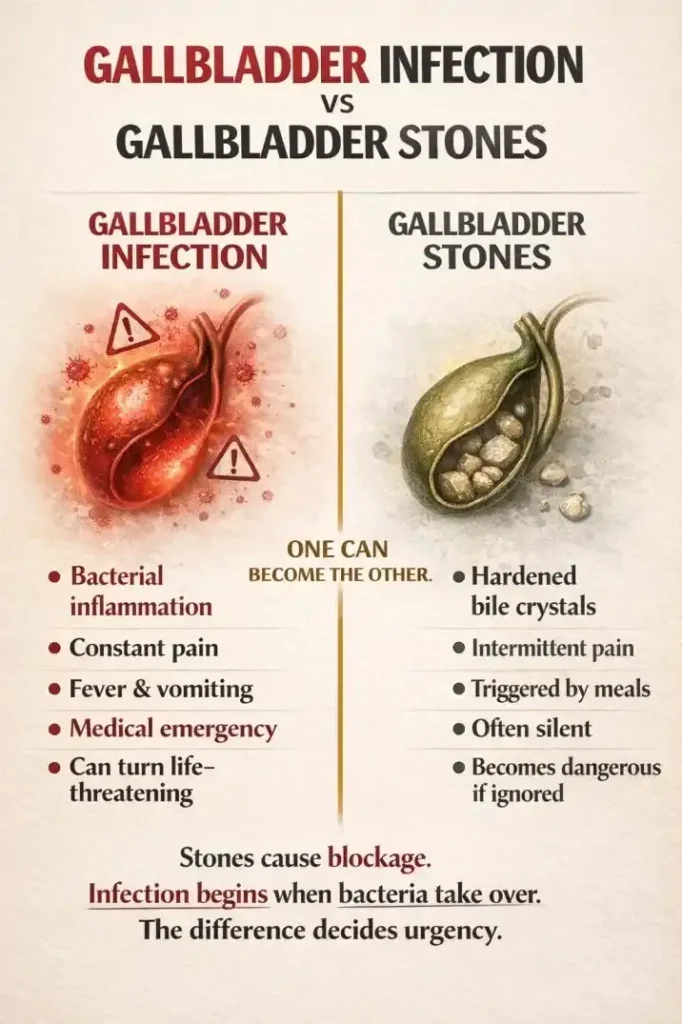
Gallbladder stones cause mechanical blockage and episodic pain. While, a gallbladder infection occurs when a stone persistently blocks the duct, leading to inflammation, swelling, and tissue damage. [Source]
If left untreated, the infection can lead to sepsis or gallbladder perforation. [Source]
Deeper Evaluation between Cholelithiasis and Cholecystitis
- Gallbladder Stones (Cholelithiasis):
These are hardened deposits of digestive fluid. They can exist silently for years. The problem begins when a stone gets stuck in the neck of the gallbladder, causing “biliary colic”—a severe, cramping pain that usually lasts a few hours after a fatty meal.
- Gallbladder Infection (Cholecystitis):
This occurs when a stone permanently blocks the cystic duct. The trapped bile becomes a breeding ground for bacteria. The gallbladder wall begins to swell, thicken, and lose blood supply.
While stones are the cause, the infection is the consequence.
Primary gallbladder infection symptoms that signal a medical emergency?
Gallbladder infection symptoms include constant, severe pain in the upper right abdomen that lasts more than 6 hours, often accompanied by a high-grade fever and chills.
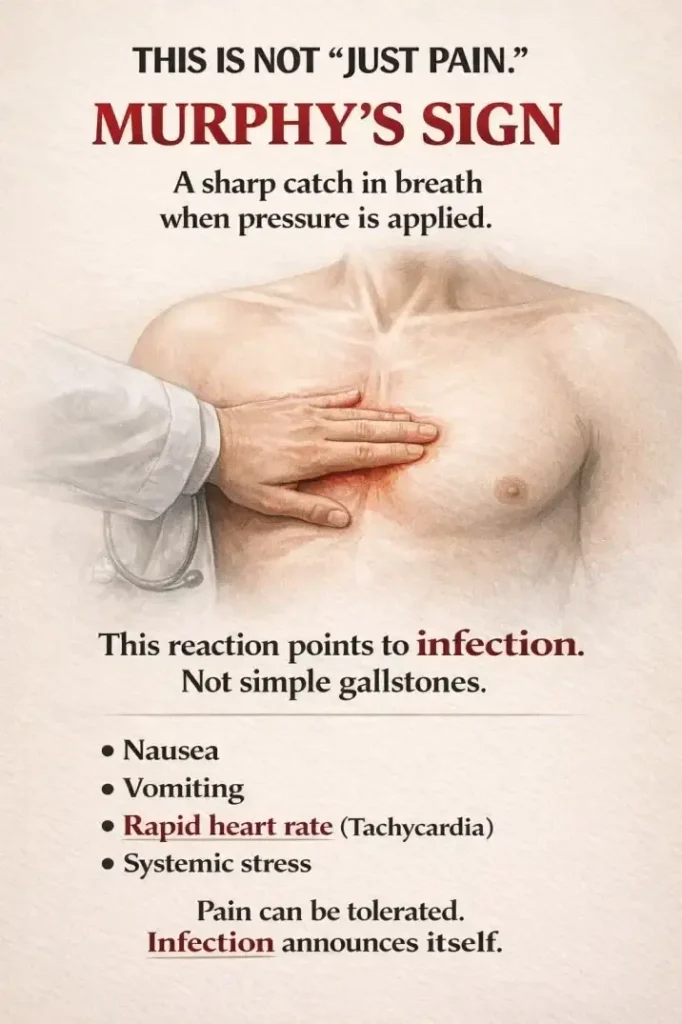
Unlike simple stones, an infection typically triggers “Murphy’s Sign,” [Source] in which the patient experiences a sharp catch in the breath when a surgeon presses on the gallbladder area.
More Symptoms To Watch Out For
- Persistent Pain: Lasts for days, unlike short gallstone attacks that usually settle within hours.
- Fever and Chills: Suggest the body is fighting an active infection.
- Murphy’s Sign: Sharp pain during right-sided examination indicates possible cholecystitis.
- Tachycardia: Rapid heartbeat often accompanies severe gallbladder inflammation and requires urgent evaluation.
Nausea, vomiting, and a rapid heart rate (tachycardia) are also key clinical indicators of an active infection. The presence of these symptoms indicates when gallbladder surgery is needed.
Dr Sanjoy Mandal, a gastrointestinal surgeon in Kolkata, looks for “systemic” signs. While both conditions cause pain, the clinical “signature” of an infection is far more aggressive.
When is gallbladder surgery needed?
A gastrointestinal surgeon determines when gallbladder surgery is needed by evaluating inflammation markers.
Emergency surgery is required if scans show a thickened wall (>3mm) or fluid buildup. For symptomatic stones, elective surgery is recommended to prevent future life-threatening infections.
When you consult an expert for gallstones treatment in Kolkata, the surgeon performs a “triage” based on three critical pillars:
1. The Ultrasound Evidence
A radiologist will look for specific “medical codes” on your scan. If the gallbladder wall is thicker than 3mm or if there is “pericholecystic fluid” (fluid leaking around the organ), the surgeon will classify it as an infection.
2. Blood Work (The Inflammatory Markers)
High White Blood Cell (WBC) counts and elevated C-reactive protein (CRP) levels indicate that your body is under siege. If your bilirubin is also elevated, it suggests gallbladder stone complications, such as a stone migrating into the main bile duct (choledocholithiasis).
3. Clinical Stability
If the patient is “toxic”—showing signs of low blood pressure or mental confusion—the best gallbladder surgeon will move straight to the operating theatre. There is no time for “watchful waiting” when the risk of a perforated gallbladder is imminent.
| Feature | Gallbladder Stones (Biliary Colic) | Gallbladder Infection (Cholecystitis) |
| Pain Duration | 30 minutes to 6 hours | More than 6 hours / Constant |
| Fever | Absent | Present (High grade) |
| Wall Thickness | Normal (< 3mm) | Thickened (> 3mm) |
| Urgency | Elective / Planned | Emergency (24-72 hours) |
Hidden gallbladder stone complications (if treatment is delayed)
Delayed treatment leads to gallbladder stone complications like organ gangrene, rupture, or pancreatitis. Migrated stones can also cause jaundice and life-threatening bile duct infections. These emergencies significantly increase the risk of mortality and the duration of hospital stay.
The fear of surgery often keeps residents staying at home, relying on “home remedies” for weeks. This delay is precisely what leads to gallbladder stone complications.
Cause → Consequence Path:
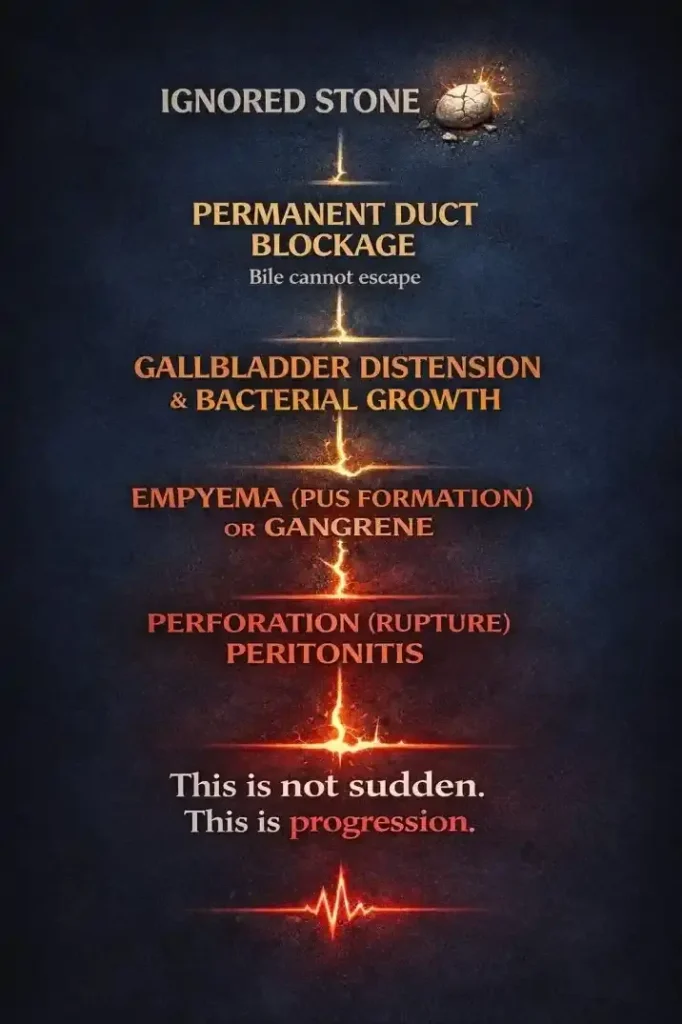
- Ignored Stone → Leads to Permanent Duct Blockage.
- Blockage → Leads to Gallbladder Distension and Bacterial Growth.
- Untreated Infection → Leads to Empyema (Pus in the gallbladder) or Gangrene.
- Gangrene → Leads to Perforation (Rupture) and Peritonitis (Life-threatening abdominal infection).
Once the gallbladder ruptures, the surgery becomes exponentially more difficult, the hospital stay extends from days to weeks, and the risk of mortality increases significantly. This is why a gastrointestinal surgeon in Kolkata emphasises early intervention.
Laparoscopic gallbladder surgery – Why is it considered the gold standard in Kolkata?
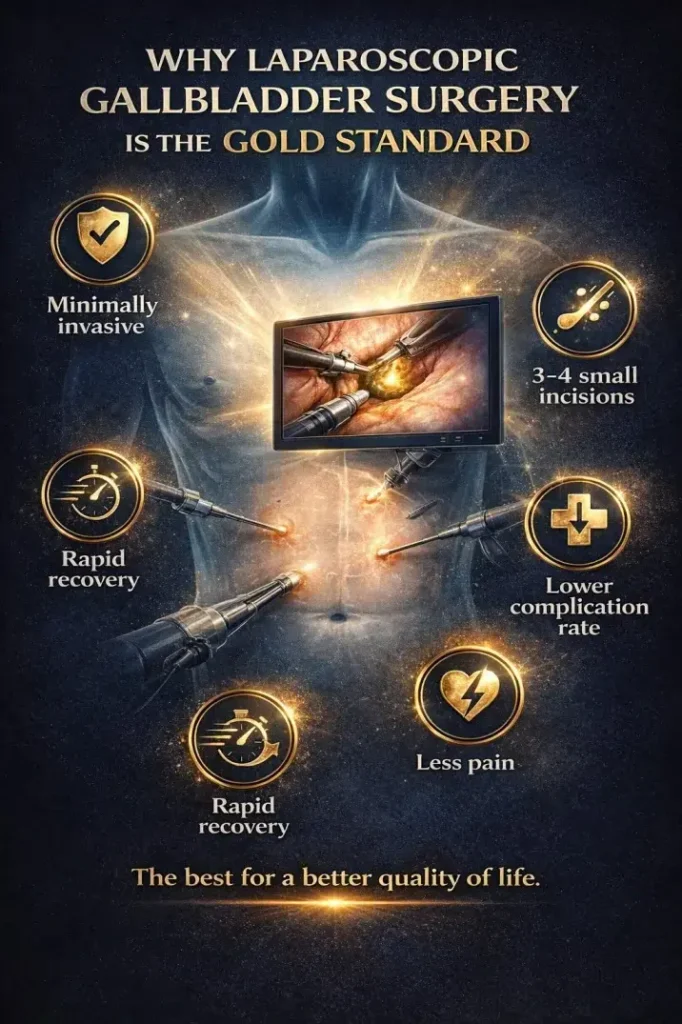
Laparoscopic gallbladder surgery is the gold standard because it replaces a large 6-inch cut with 3–4 tiny 5–10mm incisions.
This minimally invasive technique ensures significantly less pain, minimal blood loss, and faster healing. Most patients are discharged within 24 hours and return to work in approximately one week.
Modern medicine has made gallstone treatment in Kolkata incredibly efficient. The primary method used by Dr Sanjoy Mandal is laparoscopic gallbladder surgery.
How it works
Instead of a large abdominal incision, the surgeon makes 3-4 tiny ports (5-10mm). A camera and specialised instruments are used to remove the organ.
The Advantage
This technique reduces the risk of postoperative haemorrhage and ensures a faster recovery from gallbladder removal surgery.
Conversion to Open Surgery
If the infection is severe and the anatomy is distorted by pus and scarring, even the best gallbladder surgeon may have to convert to an “open” surgery to ensure patient safety. This is another reason why you should not wait until the infection becomes “frozen” or complicated.
Gallbladder removal surgery recovery – Expected timeframe
Gallbladder removal surgery recovery for light activities typically takes 7 to 10 days. Most patients walk and eat within 24 hours, while internal tissues heal over 3 to 4 weeks.
Minor digestive adjustments may occur for a few months as the body adapts to the direct flow of bile.
With planned laparoscopic gallbladder surgery, the recovery is swift

During gallbladder removal surgery recovery, the body gradually adjusts to functioning without the gallbladder.
Bile flows directly from the liver into the small intestine, supporting digestion continuously. Temporary bloating or loose stools may occur initially, but these symptoms usually settle within a few months as digestion naturally stabilises.
Don’t Let a Treatable Condition Become a Tragedy
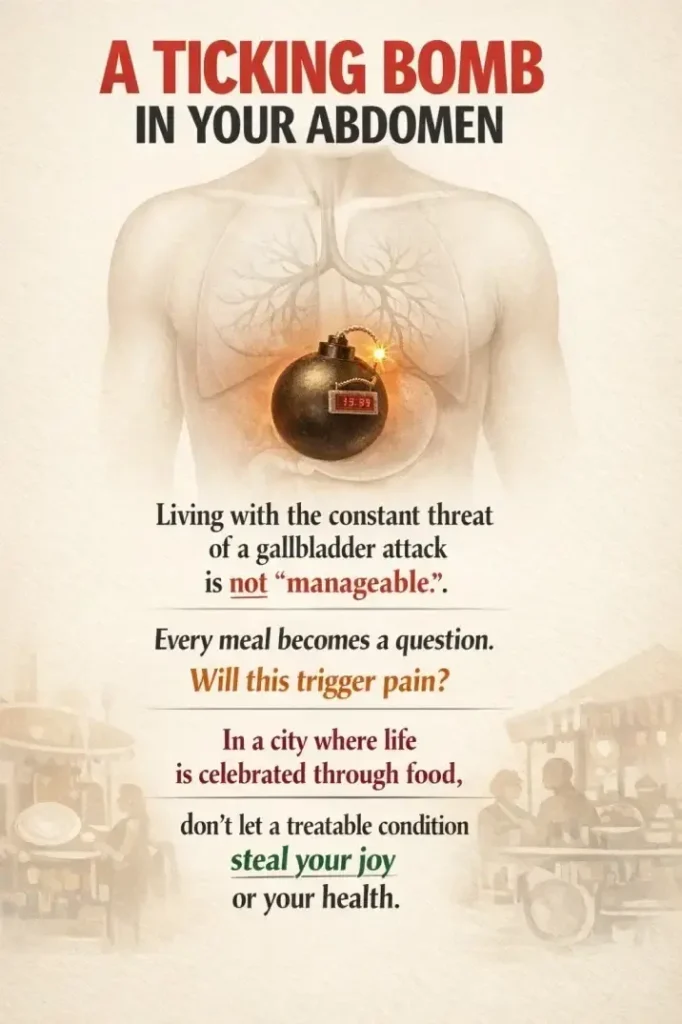
If you are searching for gallstones treatment in Kolkata, remember that timing is everything. Consult Dr Sanjoy Mandal, a leading gastrointestinal surgeon in Kolkata, for precise diagnosis and world-class surgical care
People Also Ask
Can one live a normal life after gallbladder removal?
Yes, you can live a perfectly normal life without a gallbladder. Since the liver produces bile, it will now flow directly into your small intestine to aid digestion. Most patients return to their regular diet and activities within a few weeks post-surgery.
What happens upon ignoring gallbladder stones?
Ignoring gallbladder stones can lead to life-threatening complications such as acute infection (cholecystitis), jaundice, or pancreatitis. “Silent” stones may remain harmless for years, but symptomatic stones rarely resolve on their own and typically require surgical intervention to prevent emergencies.
Is gallbladder surgery considered a major operation?
While gallbladder removal is a common procedure, it is still considered a major surgery performed under general anaesthesia. However, the laparoscopic “keyhole” technique has made it significantly safer, with smaller incisions and a much faster recovery compared to traditional open surgery.
How long does the pain last after laparoscopic surgery?
Post-operative pain is usually mild to moderate and subsides within 3 to 5 days. Temporary shoulder pain from the carbon dioxide used during the procedure may remain. This is normal and typically resolves within 48 hours as you begin walking.