
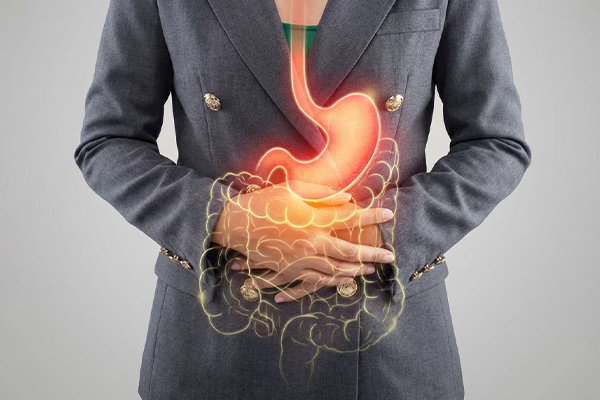
Recovery after GI cancer surgery isn’t just about time—it’s about doing the right things at the right stage. Miss a step, and healing slows, or complications creep in. Most patients move from hospital care to independence over 6–8 weeks, with steady gains in pain control, mobility, and digestion.
Early walking, structured diet progression, and consistent follow-ups define a safe recovery. If you’re under the care of Dr Sanjoy Mandal, a trusted GI cancer surgeon in Kolkata, this week-by-week guide sets clear, practical expectations.
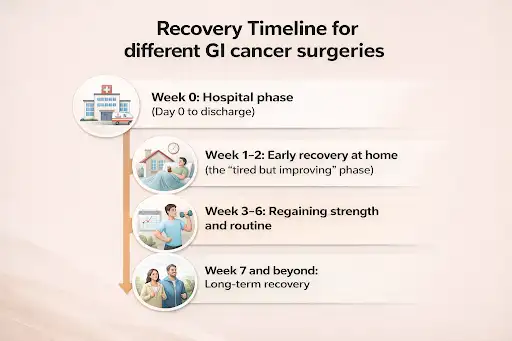
At a glance: the recovery timeline most patients follow
Most recover in phases—not randomly, but predictably.
| Phase | Timeline | What to Expect |
| Hospital phase | Day 0–5/10 | Pain control, early movement, diet restart |
| Early home recovery | Week 1–2 | Fatigue, wound healing, light activity |
| Strength rebuilding | Week 3–6 | Improved energy, diet normalisation |
| Long-term recovery | Week 7+ | Return to routine, gradual exercise |
A quick note before we begin (what’s “normal” vs what needs a doctor call)
Mild pain, fatigue, low appetite, and temporary bowel changes are expected.
Red flags include persistent fever, severe abdominal pain, vomiting, or wound discharge. Any sudden worsening needs immediate review.
Why recovery looks different for different GI cancer surgeries
Recovery varies by organ, surgical extent, and patient health. Colon, stomach, pancreas, or gallbladder procedures affect digestion differently. Minimally invasive surgery often speeds recovery, while age, nutrition, and complications influence the pace.
Colon/rectal surgery vs stomach surgery (gastrectomy) vs gallbladder/pancreas procedures
Each is a distinct GI oncology surgery tailored to the tumour’s location, stage, and the specific tissue involved.
- Colon and Rectal Surgery (Colorectal): Target: Large intestine, rectum, and anus
- Gastrectomy (Stomach): Target: Stomach.
- Pancreatic and Gallbladder Procedures (HPB): Target: Pancreas, gallbladder, and bile ducts (Hepato-pancreato-biliary system)
GI Surgery Types and Recovery Timelines
| Surgery Type | Primary Organs | Typical Recovery Timeline |
| Colorectal | Large intestine, rectum | 4–6 weeks (longer for complex cases) |
| Gastric | Stomach | 6–8 weeks |
| Pancreatic | Pancreas, bile duct | 8–12 weeks (high complexity recovery) |
| Gallbladder | Gallbladder | 1–3 weeks (faster with laparoscopy) |
Laparoscopic vs open surgery
- Laparoscopic surgery usually means smaller cuts, less pain, and faster discharge.
- Open surgery takes longer to heal and delays mobility.
ERAS recovery approach
The ERAS colorectal surgery recovery protocol emphasises early walking and feeding. This reduces complications, improves bowel recovery, and shortens hospital stay.
Week 0: Hospital phase (Day 0 to discharge)
Right after surgery: pain control, drips/drains, first steps out of bed
Pain is managed with IV medications. Patients are encouraged to sit up and walk within 24 hours. Drains and catheters are gradually monitored and removed.
Eating and drinking: how diet usually restarts
Liquids start first, followed by soft foods. The transition depends on bowel activity and tolerance.
What discharge day typically includes
Patients receive medications, wound care instructions, and a follow-up schedule. Clear guidance reduces readmission risk.
Week 1–2: Early recovery at home (the “tired but improving” phase)
What patients commonly feel
- Fatigue is common due to surgical stress
- Appetite may be reduced
- Mild discomfort persists
Walking and movement:
- Short walks are encouraged daily
- Avoid lifting weights or sudden movements
Wound care basics:
- Manage bathing, dressings, stitches or surgical glue, and swelling
- keeping the area clean and dry
Some swelling is expected, but redness, warmth, or discharge are red flags that need medical attention.
Digestion changes:
- Gas
- Bloating
- constipation/loose stools
These are common.
If your recovery feels slower than expected—or symptoms don’t match the usual timeline—it’s worth getting a structured review rather than waiting it out. Early intervention often prevents bigger setbacks.
Week 3–6: Regaining strength and routine
Energy levels and sleep: what improves, what lingers
Energy gradually improves, but occasional fatigue may persist.
Diet progression:
After colorectal surgery, the diet shifts from soft foods to balanced meals with protein and fibre.
Bowel habits: when things start to stabilise
- Bowel habits usually start stabilising within 1–3 months after colorectal surgery.
- Most patients reach a “new normal” around 3–6 months
- Though full normalisation may take longer
When can patients return to desk work after colorectal surgery?
Desk jobs resume in 3–4 weeks; heavy work takes longer due to abdominal healing.
Week 7 and beyond: Long-term recovery
Returning to exercise safely
- Light exercise can resume gradually
- Avoid strain until cleared by your surgeon
Scar healing, abdominal tightness, and rebuilding core strength
Scar tissue gradually softens over time, while abdominal tightness improves with healing. Core strength should be rebuilt slowly and under supervision to avoid strain and support proper recovery.
Follow-ups, reports, and next steps (including chemo/radiation when advised)
Follow-ups are essential to monitor healing and review pathology results.
May require additional treatments like chemotherapy or radiation, based on cancer stage. Regular check-ups help detect recurrence early.
Food guide: what to eat after GI cancer surgery
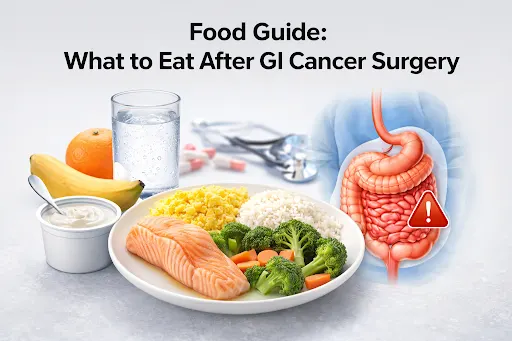
Eat 5–6 small, high-protein, nutrient-dense meals daily (eggs, fish, lean meat, dairy, tofu) to support healing, while avoiding sugary and fried foods to reduce the risk of dumping syndrome.
Start with soft, easy-to-digest foods, sip liquids between meals rather than with meals, and follow a dietitian-guided plan for personalised recovery. (Source)
First phase foods (easy-to-digest + protein focus)
- Khichdi, dal, curd rice
- Boiled vegetables
- Eggs, soft paneer
Foods that commonly trigger discomfort (gas, cramps, reflux)
- Spicy, fried foods
- Carbonated drinks
- High-fat meals
Hydration and constipation prevention
- Drink 2–3 litres of water
- Include fibre gradually
- Use stool softeners if advised
Activity guide after GI surgery: what patients ask most
- How much walking is “enough” in early weeks?
Start with 5–10 minutes daily and increase gradually as you regain strength. Walking improves circulation and recovery.
- When is driving usually safe again?
Driving is usually safe after 2–3 weeks if pain is under control and mobility is adequate.
- What about heavy lifting?
Avoid lifting >5–7 kg for 6 weeks. Ignoring this increases hernia risk.
Emotional recovery after GI surgery
Anxiety, mood swings, and fear of symptoms—what’s common
Patients often experience anxiety and mood swings about the recurrence of symptoms. This is normal and improves with time.
How families can support without hovering
Support should be practical—help with daily tasks without restricting independence.
If you have a stoma (colostomy/ileostomy): what to expect early on
Patients with a stoma (colostomy/ileostomy) need guidance on physical healing, learning new care routines, and adapting to a new way of passing waste.
Concerns during the early weeks (roughly 1-8) are common but manageable, such as leakage or skin irritation. Proper training improves confidence and quality of life.
Skin care, leakage worries, and confidence in public
Proper stoma care prevents skin irritation. Initial leakage concerns are manageable with training.
When to contact your stoma nurse/surgeon
Contact immediately for skin redness, persistent leakage, or appliance issues.
Post–GI Surgery Red Flags: Call Your Surgeon Immediately

- Fever or chills: Temperature above 101°F (38.3°C) that doesn’t settle
- Worsening abdominal pain: Not relieved by medication or getting more intense
- Incision problems: Spreading redness, warmth, or excessive swelling
- Abnormal wound drainage: Yellow, green, foul-smelling, thick, or cloudy discharge
- Can’t eat or drink: Ongoing nausea, vomiting, or inability to keep fluids down
- Breathing issues: Shortness of breath, chest pain, or coughing up yellow/green/bloody mucus
- Vomiting blood: Or material that looks like coffee grounds
- Abnormal stools: Black, tarry, or bloody stools (possible internal bleeding)
- Dehydration signs: Low urine output or dizziness/lightheadedness
- Unusual drain output: Enteric, faecal, or pus-like discharge from surgical drains
- DVT symptoms: Leg swelling, pain, warmth, or redness (possible blood clot)
Immediate evaluation by Dr Sanjoy Mandal, a trusted GI surgeon in Kolkata, becomes vital in such scenarios.
Kolkata GI Cancer Follow-Up Actions: What to Do Next
- Schedule Routine Check-ups (every 3 to 6 months for the first five years)
- Imaging and Laboratory Tests
- Management of Side Effects
- Maintain Medical Records
What to carry to follow-ups
- Surgical reports
- Pathology results
- Medication lists
- Symptom logs
How to choose the right GI cancer surgeon in Kolkata for ongoing care
Look for
- Specialisation in minimally invasive and oncologic surgery
- Experience with high-volume surgeries
- Access to a multidisciplinary team to ensure comprehensive, ongoing care.
Whom to trust for GI cancer follow-up care in Kolkata?
Dr Sanjoy Mandal, a qualified GI cancer surgeon in Kolkata (20+ years experience, over 10,000 successful surgeries) provides continuity of care with a focus on long-term outcomes.
Wrapping Up: What “good recovery” actually looks like (week by week)
A successful recovery means controlled pain, steady mobility, improved digestion, and no complications across each phase. Structured follow-ups and adherence to medical advice are critical.
Dr Sanjoy Mandal, an experienced GI cancer surgeon in Kolkata, ensures precise care, safe recovery, and long-term outcomes. He specialises in minimally invasive and oncologic surgery and offers structured follow-ups with multidisciplinary support, ensuring safer recovery and consistent results.
If recovery feels off-track, don’t wait for complications to show up.
Get a structured review now.
People Also Ask
How long does it take to recover from colorectal surgery?
Most patients recover within 6–8 weeks, with mobility improving by week 2–3 and routine activity by week 4–6.
Is fatigue normal after GI surgery?
Yes. Fatigue may last several weeks and improve gradually with recovery.
What diet is best after colon cancer surgery?
Start with soft foods, then shift to a protein-rich, fibre-balanced diet.
When does one return to work after GI surgery?
Desk work resumes in 3–4 weeks, heavy work in 6–8 weeks or longer.
When do bowel movements return to normal after surgery?
They begin stabilising within 2–4 weeks, but full normalisation may take months.