
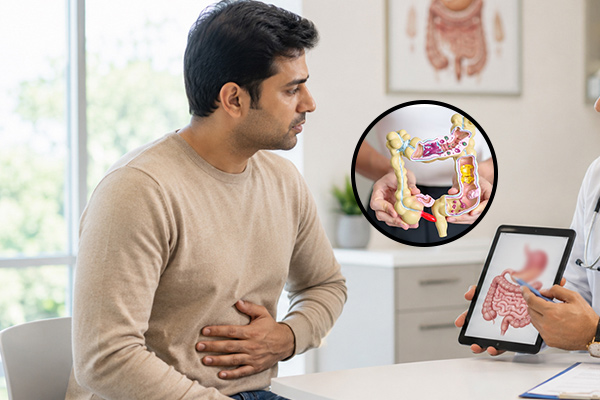
Severe Inflammatory Bowel Disease (IBD), including Crohn's disease and ulcerative colitis, causes persistent inflammation of the digestive tract, leading to severe abdominal pain, frequent diarrhoea, rectal bleeding, weight loss, and fatigue.
When symptoms become difficult to control, treatment may require immunosuppressants, biologic therapies, or surgery to reduce inflammation, prevent complications, and improve quality of life.
This guide explains when surgery is recommended, how procedures differ for Crohn's disease and ulcerative colitis, what recovery involves, and what life may look like afterwards.
When Is Surgery Necessary for Crohn’s or Colitis?
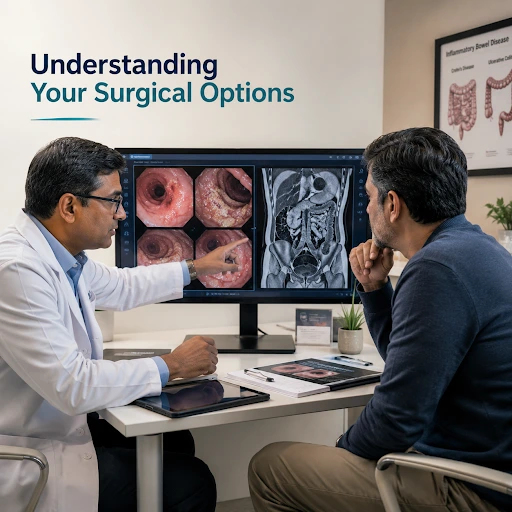
Surgery for Crohn's disease and ulcerative colitis is usually recommended when medications and dietary changes no longer control symptoms or when serious complications develop, such as bowel obstruction, abscesses, severe bleeding, perforation, or colorectal cancer.
While surgery is not a cure for either condition, it can provide lasting symptom relief and significantly improve quality of life.
Warning Signs and Complications That May Require Surgery
- Narrowed sections of the intestine (strictures) causing bowel obstruction.
- Abnormal tunnels (fistulas) between the bowel and nearby organs or skin.
- Collections of infection known as abscesses.
- Severe or persistent intestinal bleeding.
- A bowel perforation, which requires emergency treatment.
- Toxic megacolon, where the colon becomes dangerously enlarged and inflamed.
- Precancerous changes (dysplasia) or an increased risk of colorectal cancer in long-standing disease.
Early recognition of these complications allows timely treatment before permanent bowel damage or other serious problems occur.
How Is Crohn’s Disease Different From Ulcerative Colitis When It Comes to Surgery?
Surgery can be curative for ulcerative colitis because the disease affects only the colon and rectum. Removing the entire colon and rectum eliminates the diseased tissue.
Crohn's disease surgery is not curative, as the condition can affect any part of the digestive tract and may recur at or near the surgical site. Even so, surgery can effectively treat complications and provide long-term symptom relief.
| Feature | Ulcerative Colitis (UC) Surgery | Crohn's Disease Surgery |
| Curative Potential | Potentially curative since the disease is strictly limited to the colon and rectum. | Not curative because the disease can recur anywhere in the gastrointestinal tract. |
| Surgical Goal | Complete eradication by removing the entire diseased organ. | Bowel-sparing to preserve as much functioning intestine as possible. |
| Common Procedures | Total proctocolectomy with ileal pouch-anal anastomosis (J-pouch) or end ileostomy. | Segmental resection (removing short diseased sections) or strictureplasty (widening narrow areas). |
| Anatomical Scope | Confined entirely to the large intestine (colon) and rectum. | Can target any part of the digestive tract, from the mouth to the anus. |
| Primary Triggers | Severe flares, toxic megacolon, severe bleeding, or precancerous dysplasia. | Bowel obstructions (strictures), deep abscesses, and penetrating fistulas. |
| Recurrence Rate | Extremely low; symptoms rarely return once the colon and rectum are gone. | High risk of recurrence, usually developing right at the surgical connection site. |
| Post-Op Medication | Often discontinued for IBD management after a successful total removal. | Mandatory ongoing therapy to suppress immune activity and prevent future flares. |
What Types of Surgery Are Used for Crohn’s Disease?
Bowel Resection
Bowel resection surgery removes the damaged portion of the intestine while reconnecting the healthy ends. It is commonly performed when severe inflammation, obstruction, or repeated flare-ups affect a specific bowel segment. Although symptoms often improve significantly, ongoing medical treatment helps reduce the risk of disease recurrence.
Strictureplasty
Instead of removing part of the intestine, strictureplasty widens narrowed bowel segments caused by scarring. This bowel-preserving procedure is particularly valuable for patients with multiple strictures or previous surgeries, helping maintain intestinal length and reduce the risk of short bowel syndrome.
Fistula Repair
Complex fistulas that do not heal with medication may require surgery. Depending on their location and severity, the surgeon may remove infected tissue, drain abscesses, close abnormal connections, or combine surgery with medical therapy to improve healing and reduce recurrence.
Colectomy and Proctocolectomy
If Crohn's disease severely damages the colon or rectum, removing part or all of the large intestine may be necessary. A colectomy removes the colon, while a proctocolectomy removes both the colon and rectum. The procedure selected depends on the extent of disease and the patient's overall condition.
What Types of Surgery Are Used for Ulcerative Colitis?
Colectomy (Total or Subtotal)
A total colectomy removes the entire colon, while a subtotal colectomy leaves part of it in place temporarily. The most appropriate approach depends on whether surgery is planned, urgent, or performed during a medical emergency.
J-Pouch (Ileal Pouch-Anal Anastomosis) Surgery
This procedure creates a small internal pouch from the end of the small intestine, allowing stool to pass through the anus without a permanent external bag. During recovery from j-pouch surgery, bowel frequency gradually decreases as the pouch adapts over several months.
Permanent Ileostomy
Some patients require or choose a permanent ileostomy, in which the small intestine is brought through an opening in the abdominal wall to divert stool into an external pouch. Modern ostomy appliances are discreet, secure, and designed to support an active lifestyle.
What Is the Difference Between an Ileostomy and a Colostomy?
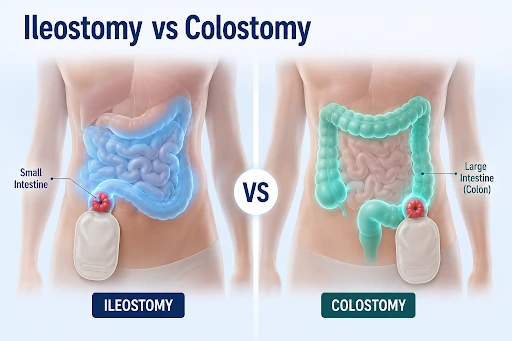
An ileostomy diverts stool from the small intestine, while a colostomy diverts it from the large intestine. The choice depends on the disease, the part of the bowel being treated, and whether the stoma is intended to be temporary or permanent.
Understanding ileostomy vs colostomy helps patients prepare for surgery and recovery.
| Ileostomy | Colostomy |
| Uses the end of the small intestine (ileum). | Uses part of the large intestine (colon). |
| Stool is usually looser because less water is absorbed. | Stool is often more formed depending on the remaining colon. |
| Common after removal of the colon. | Often performed when part of the colon or rectum requires healing or removal. |
| May be temporary or permanent. | May also be temporary or permanent depending on the condition. |
Your surgeon will explain which option is most suitable based on your diagnosis and planned procedure.
What Does Recovery Look Like After IBD Surgery?
- Hospital Stay
Most patients stay 2-7 days after laparoscopic surgery or up to 10 days after open surgery. Early walking and pain management support recovery.
- Diet Reintroduction
You'll start with clear liquids before progressing to soft, low-fibre foods and gradually returning to a balanced diet. Good hydration is essential.
- Activity Restrictions
Walking is encouraged, but avoid lifting heavy objects or strenuous exercise for 2-6 weeks. Abdominal strain should be limited for about 6 weeks.
- Recovery Timeline
Most people resume normal daily activities within 4-12 weeks, although fatigue may continue for 2-3 months as healing progresses.
Can Life Return to Normal After Surgery?
Yes. Life after colectomy is significantly improved for most people, with relief from debilitating symptoms and a gradual return to work, exercise, travel, and other daily activities. Recovery occurs in stages, and most patients resume normal routines within 4 to 12 weeks, although long-term follow-up remains essential
- First 2 to 4 weeks: Expect a hospital stay of 3 to 10 days, followed by a low-fibre diet, smaller frequent meals, and a gradual return to light daily activities or desk work.
- By 6 to 12 weeks: Most people can resume a balanced diet, stool frequency and consistency often improve, and full physical activity, including heavy lifting, is usually possible.
- Long-term: Surgery improves quality of life but does not cure Crohn's disease or ulcerative colitis. Regular follow-up, colonoscopies, and maintenance medications may still be needed to reduce the risk of inflammation or disease recurrence.
How Should You Prepare for IBD Surgery — Physically and Emotionally?
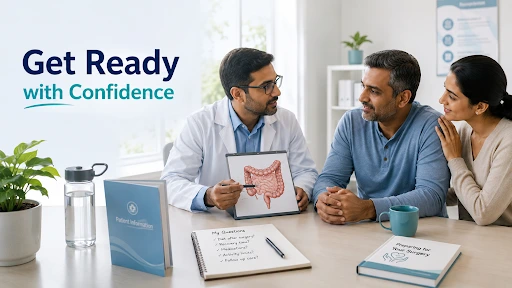
Preparing for IBD surgery, such as a bowel resection or ostomy creation, requires both physical and emotional preparation.
- Optimise nutrition by correcting deficiencies and building protein reserves to promote healing.
- Improve your fitness with light, doctor-approved exercises before surgery.
- Review all medications with your surgical team, as some drugs may need to be stopped temporarily.
- Complete bowel preparation exactly as instructed before the procedure.
- Build a support system to help with meals, transportation, and other recovery needs.
- Connect with others who have undergone IBD surgery or join a support group for reassurance.
- Ask your surgeon questions about the procedure, hospital stay, and recovery timeline to reduce uncertainty.
- Practise relaxation techniques, such as mindfulness, deep breathing, or gentle yoga, to help manage preoperative anxiety.
You’re Not Alone in This
Surgery is an important treatment option for many people living with severe Crohn's disease or ulcerative colitis.
Understanding why it is recommended, what recovery involves, and what to expect afterwards can help you make informed decisions with greater confidence.
If you need to speak to an experienced gastrointestinal surgeon in Kolkata, Dr Sanjoy Mandal can help determine the most appropriate treatment plan for your condition.
Book an appointment today.
People Also Ask
Is surgery a cure for Crohn’s disease?
No. Surgery treats complications and removes damaged bowel, but Crohn's disease can recur elsewhere in the digestive tract.
Is surgery a cure for ulcerative colitis?
Removing the entire colon cures the intestinal disease, although ongoing medical follow-up remains important.
What percentage of people with Crohn’s disease eventually need surgery?
Many patients require surgery during their lifetime, although modern biologic therapies have reduced the overall need compared with previous decades.
Will I need a permanent ostomy bag?
Not always. Whether an ostomy is temporary or permanent depends on your diagnosis, surgical procedure, and overall bowel health.
Can Crohn’s disease come back after surgery?
Yes. Surgery does not eliminate Crohn's disease, so recurrence in another part of the digestive tract remains possible.
What is a J-pouch and who is it for?
A J-pouch is an internal reservoir created from the small intestine, mainly for suitable patients undergoing surgery for ulcerative colitis.
Is IBD surgery safe?
IBD surgery is generally safe when performed by experienced colorectal surgeons, although every operation carries potential risks and benefits.
Can I live a normal life with an ostomy?
Yes. Most people with an ostomy return to work, travel, exercise, and everyday activities after recovering and learning routine stoma care.