
Pain during a bowel movement, blood on the tissue, or a swelling near the anus often gets called “piles”. Yet these symptoms can come from three different conditions, each needing a different approach.
I would not identify the cause from symptoms alone. A doctor’s examination, with tests when needed, is the reliable way to confirm it. Understanding the patterns can help explain what is happening and seek appropriate care.
Why are Piles, Fissure and Fistula So Often Confused?
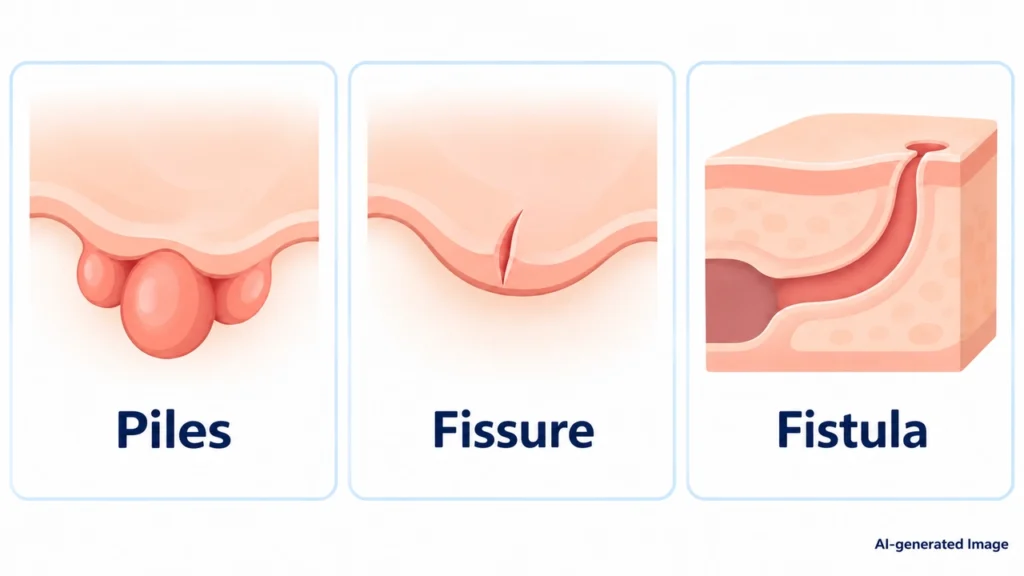
Piles, fissure and fistula affect the same area and can cause similar symptoms, making them difficult to distinguish without an examination.
Reluctance to share the problem with loved ones or even a doctor may lead people to try creams first, but piles cream cannot treat a fistula or abscess. I encourage explaining when the pain occurs, how long it lasts, and whether there is discharge.
What are Piles (Haemorrhoids) and What Do They Feel Like?
Piles are enlarged cushions of blood vessels in or around the anal canal that normally help seal the anus. They can cause symptoms when swollen or displaced, depending on whether they are internal or external.
Internal vs External Piles in Simple Terms
| Feature | Internal Piles | External Piles |
| Location | Inside the anal canal | Beneath the skin around the anus |
| Typical piles symptoms | Painless, bright red bleeding; protruding tissue; mucus; incomplete emptying | A lump, itching, irritation or discomfort |
| Pain | Often painless, although prolapsed piles can become painful | A blood clot, called a thrombosed external haemorrhoid, can cause sudden, severe pain |
| Risk factors | Constipation, straining, low fibre intake, pregnancy and prolonged toilet sitting; inactivity may contribute through constipation | Similar risk factors |
| Grading | Grade I stays inside; grade II protrudes and returns itself; grade III needs pushing back; grade IV remains outside and cannot be pushed back | Not classified using the internal piles grading system |
What is an Anal Fissure and What Does It Feel Like?
An anal fissure is a small tear in the anal canal lining, often caused by hard stool. The surrounding muscle may tighten, reducing blood flow and slowing healing.
Typical anal fissure symptoms include:
- Sharp, cutting pain while passing stool
- Burning that continues afterwards, sometimes for hours
- A small streak of bright red blood on tissue
Hard stools, repeated straining and frequent diarrhoea can trigger a tear. A recent fissure is acute; one persisting beyond roughly six to eight weeks is generally considered chronic, although definitions vary. Fear of the next painful bowel movement may lead to holding stool back, worsening constipation. Addressing this cycle early is necessary.
What is an Anal Fistula and How Does It Develop?
An anal fistula, or fistula-in-ano, is an abnormal tunnel connecting the anal canal to nearby skin. It usually develops when an anal abscess drains but leaves a tract between the infected anal gland and the skin.
Common anal fistula symptoms include:
- Persistent or intermittent pus or discharge
- A boil or swelling that repeatedly returns
- Throbbing pain that eases after drainage
- Irritated skin, sometimes with blood-stained discharge
Fever with increasing pain or swelling can indicate another abscess. A surface opening may appear to close while the tract remains underneath. Fistulas rarely heal without treatment, so a specialist assessment is recommended even when discharge temporarily stops.
How Can You Tell Piles, Fissure and Fistula Apart?
For piles vs fissure or fissure vs fistula, these patterns offer clues rather than a diagnosis.
| Feature | Piles | Fissure | Fistula |
| Main symptom | Bleeding or protrusion | Pain during stool | Recurring discharge |
| Pain | Often absent internally; severe with a clot | Sharp, then burning | Throbbing or recurring |
| Bleeding | Usually bright red | Usually small streaks | May mix with discharge |
| Discharge | Sometimes mucus | Pus is not typical | Often pus |
| Lump | Swelling or protruding tissue | Sometimes a chronic skin tag | Recurrent boil or opening |
| Usual treatment | Bowel care; selected procedures | Stool softening and medicines | Usually a procedure |
Pain during stool suggests a fissure; painless bleeding or protrusion suggests piles; recurring drainage suggests a fistula. Symptoms can overlap, and two conditions may coexist.
When is Bleeding or Anal Pain a Warning Sign?
Finding blood in stool after a bowel movement does not establish that piles are responsible. Polyps, bowel inflammation, and colorectal cancer are other possible causes.
- Seek emergency care for heavy or nonstop bleeding, large clots, or faintness.
- Seek urgent assessment for black or dark red stool, or severe anal pain, particularly with fever or swelling.
- Arrange prompt review for repeated bleeding, unexplained weight loss, changed bowel habits, anaemia or a persistent lump.
One must consider assessment of new symptoms after 40–45. While younger adults should not ignore bleeding. Tests depend on symptoms and individual risk.
How are Piles, Fissure and Fistula Treated?
Piles, fissure and fistula treatment depends on the diagnosis, severity and examination findings.
Piles Treatment
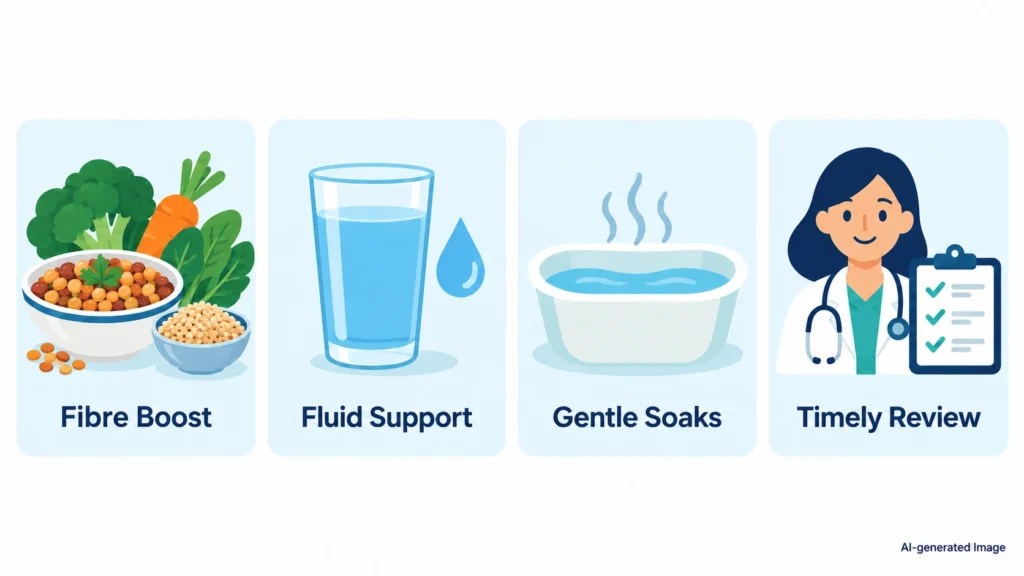
Fibre, adequate water, shorter toilet visits and warm sitz baths can help. Medicines may ease symptoms or soften stool. Persistent internal piles may need rubber band ligation; larger or troublesome piles may require surgery.
Fissure Treatment
Fibre and prescribed stool softeners reduce strain. Topical medicines such as diltiazem or glyceryl trinitrate relax the sphincter. Persistent cases may need botulinum toxin injections or selected surgery, such as lateral internal sphincterotomy, after discussing bowel-control risks.
Fistula Treatment
Most need a procedure. Options include fistulotomy, a draining seton or sphincter-preserving surgery, depending on the tract’s relationship to the bowel-control muscles. Antibiotics alone usually cannot cure it. Crohn’s-related fistulas need a different, combined medical and surgical approach. I would explain the options after assessment.
When Should You See a Doctor?
Arrange a consultation if mild symptoms persist beyond a week despite basic care, keep returning or include discharge. Have unexplained bleeding checked. Warning signs need earlier attention. These conditions are common and treatable; I encourage seeking help before discomfort begins controlling your daily routine.
Conclusion
The main difference between piles and fissure is swollen vascular tissue versus a tear; a fistula is a tunnel usually linked to infection. If you are looking for a piles doctor in Kolkata, I am here to identify the cause and recommend a treatment plan rather than guess.
What People Also Ask
Can piles turn into a fistula?
No, piles do not turn into a fistula. An anal fistula usually develops after an infected anal gland forms an abscess, leaving a tunnel between the anal canal and nearby skin.
Does a fissure go away on its own?
Many recent anal fissures heal with softer stools, adequate fibre and fluids, and warm baths. If symptoms worsen or do not improve after a week of basic care, seek medical advice.
Can a fistula heal without surgery?
Most anal fistulas need a procedure because the underlying tract rarely heals on its own. Fistulas linked to Crohn’s disease may also need specialist medicines alongside treatment to control infection.
Which is more painful, piles or fissure?
A fissure usually causes sharper pain during and after passing stool than uncomplicated internal piles. However, an external pile containing a blood clot can cause sudden, severe pain.
What foods help with piles and fissures?
Fibre-rich foods such as dal, vegetables, fruit, oats and whole grains help soften stools and reduce straining. Increase fibre gradually and drink adequate fluids to support easier bowel movements.