
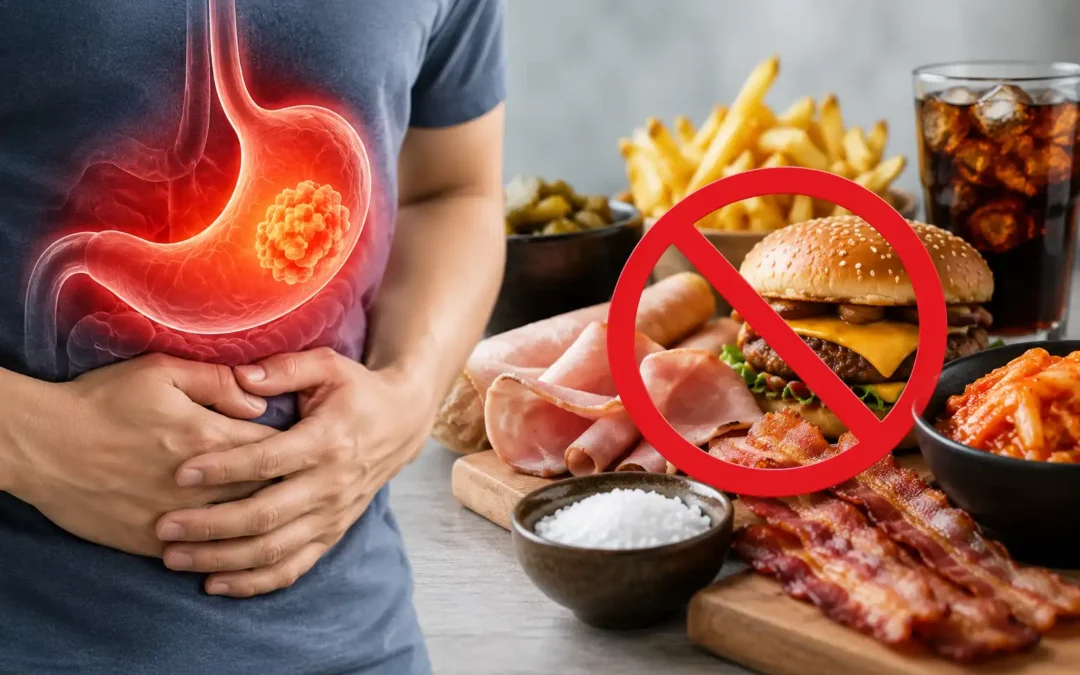
Stomach cancer foods to avoid is one of the most searched questions after a diagnosis, and one of the most misunderstood. Food does not cause cancer on its own. But research links some eating habits to a higher risk. Other foods can make treatment side effects worse.
This guide covers both. You will learn which foods raise risk, what to avoid during treatment and after surgery, and what to eat instead. This is general information, not medical advice. Your care team knows your case best.
Can the Food You Eat Affect Your Risk of Stomach Cancer?
Yes, but diet is one factor among several. Researchers say “linked to,” not “causes.” A link means risk rises in groups of people who eat a food often. It does not mean one meal leads to cancer.
Two situations matter:
- Lowering your risk if you are healthy
- Eating safely during treatment or after surgery
The advice differs for each, so this guide treats them separately.
Which Foods Are Linked to a Higher Risk of Stomach Cancer?
A World Cancer Research Fund review found strong evidence that three or more alcoholic drinks a day, salt-preserved foods and processed meat increase risk. Read the AICR’s explanation of the report for more detail.
Are Salt-Preserved Foods Bad for the Stomach?
Salt-preserved foods show the clearest link. Examples include salted or dried fish and pickled vegetables. Most of this research comes from East Asia, where these foods are traditional. Salt can damage the stomach lining, and H. pylori infection makes the damage worse. Eat these foods rarely and choose fresh options.
Does Processed Meat Raise Stomach Cancer Risk?
Processed meat includes bacon, ham, salami, hot dogs and some sausages. The review linked it to non-cardia stomach cancer, which affects the lower part of the stomach. Nitrites and nitrates in these meats may form compounds that harm the stomach lining. Eating about 50 grams a day, roughly two rashers of bacon, raised the risk of this cancer type by 18 percent.
How Much Alcohol Increases the Risk?
Strong evidence points to about three or more drinks a day. The risk is highest in men, smokers and former smokers. Alcohol breaks down into acetaldehyde, a known carcinogen. Limiting alcohol, or skipping it, lowers your risk.
What About Grilled and Barbecued Foods?
Some evidence suggests grilled or barbecued meat and fish may raise risk, and so may eating little fruit. The evidence is limited. Treat these as sensible habits, not proven causes.
Do Other Risk Factors Matter as Much as Diet?
Often they do. Helicobacter pylori infection, smoking, excess weight and family history all play a role. H. pylori is an independent cause of stomach cancer. Don’t rely on diet alone. If you have long-term acidity or a family history, ask your doctor about testing.
What Foods Should You Avoid During Stomach Cancer Treatment?
Treatment can reduce appetite and irritate the digestive system. Side effects vary, so your oncology team’s advice comes first. Many patients find these foods hard to tolerate:
- Spicy foods
- Fried and very fatty foods
- Acidic foods such as citrus fruit, tomatoes and vinegar
- Very hot or very cold foods and drinks
- Carbonated drinks and gas-producing foods
- Alcohol and large amounts of caffeine
Aim for five or six small meals a day. Choose soft, protein-rich foods such as eggs, yogurt and soups. Drink between meals instead of during them. Strict dieting is not recommended during treatment, because losing weight lowers your energy and your ability to fight infection.
A GI surgeon in Kolkata or your treating team can tailor a plan to your case. You can also read our guide to stomach cancer treatment options.
What Should You Avoid After Stomach Surgery (Gastrectomy)?
A gastrectomy removes part or all of the stomach. Food then reaches the small intestine too fast. This causes dumping syndrome, with cramps, diarrhea, sweating and dizziness. Up to half of patients have it.
The National Cancer Institute’s diet plan advises avoiding added sugars, sugar alcohols, and high-fibre and gas-producing foods after surgery. Read the full NCI diet guide after gastrectomy. Early on, avoid:
- Sweets, sweetened drinks and fruit juice
- Sugar alcohols such as sorbitol and xylitol, often in sugar-free products
- Fried foods and processed meats
- Alcohol and caffeine
- Drinking fluids during meals
Drink fluids 30 minutes before or after eating, not during meals. Sit upright after eating and chew food until it is almost puree. A food diary helps you spot triggers. Your dietitian will tell you when to add foods back. Learn more about recovery after stomach cancer surgery.
What Can You Eat Instead?
Focus on fresh, simple foods:
- Fresh fruit and vegetables, after surgery only as your dietitian allows
- Eggs, fish, chicken and yogurt for protein
- Small, frequent meals
Fresh food beats preserved food for lowering risk. Protein supports healing after surgery. Never start supplements without asking your care team. They can interfere with treatment.
How Can You Swap Risky Foods for Safer Choices?
| Instead of | Try |
|---|---|
| Bacon, salami, hot dogs | Fresh chicken, fish, eggs |
| Salted or dried fish, heavy pickles | Fresh fish, fresh vegetables |
| Daily alcohol | Water or herbal tea |
| Sugary snacks (after surgery) | Protein-rich snacks your dietitian approves |
When Should You See a Doctor or Dietitian?
See a doctor if you notice:
- Indigestion or stomach pain lasting several weeks
- Unexplained weight loss
- Trouble swallowing
- Repeated vomiting
- Black stools or blood in vomit
These signs have many causes, and most are not cancer. But they need checking. Early diagnosis gives you more treatment options. A GI cancer doctor in Kolkata can examine you, order an endoscopy if needed and refer you to an oncology dietitian. See our page on stomach cancer symptoms and diagnosis.
Frequently Asked Questions
What foods cause stomach cancer?
No single food causes it. Salt-preserved foods, processed meat and heavy alcohol use are linked to higher risk.
Is spicy food bad for stomach cancer?
Research does not show that spicy food causes stomach cancer. During treatment, many patients find it irritating, so ask your care team.
Can diet alone prevent stomach cancer?
No. Diet helps, but H. pylori infection, smoking, weight and family history matter too.
What can I eat with stomach cancer?
Small, soft, protein-rich meals work for many patients. Your dietitian can personalise this.
Can a stomach cancer patient drink coffee?
Large amounts of caffeine can irritate the stomach. Ask your team how much is safe for you.
Conclusion
Limit salt-preserved foods, processed meat and alcohol to lower your risk. During treatment or after surgery, follow your care team’s food plan. For personal advice, book a consultation.